
Why false bylines undermine trust in iGaming affiliates
Matthew finds fabricated articles published under his name, raising questions about how affiliates verify authorship and protect reader trust

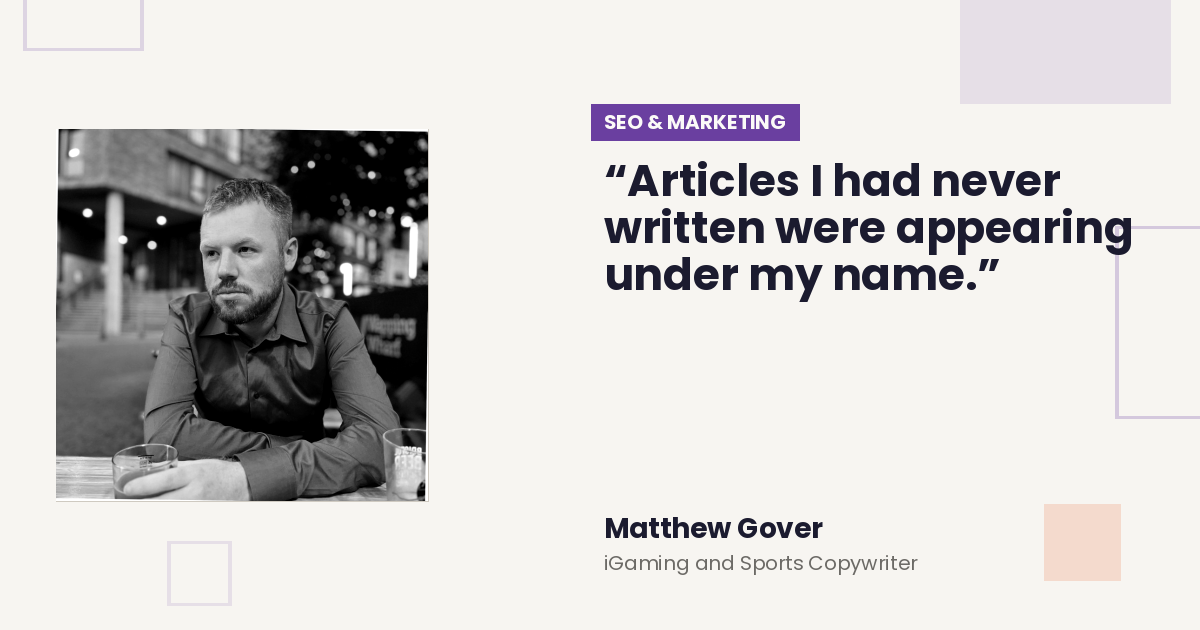
A few weeks ago, I was updating my LinkedIn profile, looking to replace some of my older writing samples with articles that were still live on reputable websites. In doing so, I discovered that my career had apparently been progressing without me. Articles I had never written were appearing under my name.
In one case, people I had never worked with were even praising what a pleasure I was to work with. I did briefly wonder whether I had undergone some sort of Severance procedure, with several versions of me leading independent professional lives, but quickly concluded that this wasn’t the most plausible explanation.
There are obvious implications for a writer whose name is attached to somebody else’s work. In this piece, however, I want to focus on what this practice means for the credibility of iGaming affiliates and the trust readers place in their recommendations.
The word ‘trust’ is bandied about a great deal in iGaming, perhaps because players have plenty of reasons to be distrustful. Unlicensed operators, lengthy withdrawal times and KYC checks that can seem arbitrary give good affiliates an important role to play. Experienced writers can scrutinise an operator’s offering, explain its terms and identify drawbacks that might not be apparent from the casino’s marketing.
The best affiliates, to use a cliché, tell it how it is. If a website reviews a hundred casinos and concludes that all are brilliant, even the least cynical reader ought to question its verdicts. Much of what makes a reviewer credible is their willingness to criticise an operator, even when there is an obvious financial incentive to recommend it.
Why are expert bylines so valuable to affiliates?
An affiliate that publishes a review alongside an experienced writer’s name, photograph and biography gives readers a reason to take that assessment seriously. Readers would reasonably expect that experience to have informed the review. If a casino review carries my name, why would a reader assume I had never seen it?
Writers can, of course, work alongside researchers and editors, and specialists can review somebody else’s work, provided those contributions are credited accurately. With a false byline, even if every detail happens to be correct, the reader has still been misled about whose judgement they are relying on.
Paying for a name
An affiliate could agree to pay an established writer a fee in exchange for permission to use their name as a byline. Another might simply use a writer’s name without asking, as happened in my case. The first arrangement might appear more legitimate, but if the writer plays no part in producing or reviewing the articles, how much better is it from the reader’s perspective?
Imagine an affiliate generating casino reviews with AI, having an unnamed editor check them, and attributing them to a writer who has agreed to the arrangement but never reads them. The same principle applies if another writer produces the reviews: readers are being asked to trust the judgement of someone who had no involvement.
Paying someone to act as an ambassador or to review material they did not write can be perfectly legitimate, provided their role is described accurately. But if the named writer had nothing to do with the review, their permission makes no difference to the reader. The byline still suggests they wrote it.
28
Websites found using names, photos and reputations of UK gambling harm academics without consent
6
UK academics impersonated, from universities including Glasgow, Swansea, Loughborough and Bristol
20 years
Experience researching gambling harm claimed by Professor Heather Wardle, used without her consent
The Guardian, 22 November 2026
The incentive to appear credible
There are two audiences an affiliate might hope to impress with a credible author profile: prospective players and Google. Google’s guidance on creating helpful content encourages accurate authorship information and discusses experience, expertise, authoritativeness and trustworthiness (E-E-A-T). Google is clear that E-E-A-T is not itself a specific ranking factor, but it is easy to see why publishers might view an established name as an SEO advantage. The operative word in that guidance, though, is accurate. Google also explicitly warns against deceptive authorship information.
Google’s advice on reviews is equally relevant here. It encourages reviewers to provide evidence of their first-hand experience and to discuss the merits and shortcomings of a product based on original research. Simply adding a photograph and an author biography does nothing to show that such research took place.
1,000+
Cease-and-desist letters issued to advertisers and operators in the first six months of 2026
1,688
Websites disrupted or geo-blocked in the first six months of 2026
2,032
Cease-and-desist notices issued by the Illegal Markets team since April 2024
447,778
URLs referred to Google and Bing since April 2024
Gambling Commission
Who is really behind the review?
So how can readers establish who actually wrote a review? As my experience illustrates, establishing that the writer exists is insufficient. A link to their LinkedIn profile might lend the byline credibility, but an affiliate can add it without the writer’s knowledge. A reference to the affiliate on the writer’s own website would be a more convincing indication of a working relationship, although even that would not establish their involvement in every article.
Gambling affiliates should distinguish between who wrote a review, who checked its facts and who assessed its conclusions. Publishers should be able to show what each contributor did and which version of the review they approved. Nor should a named expert replace a clear review methodology. If a casino is praised for fast withdrawals, readers should know whether that judgement comes from actual testing or the operator’s own claims.
In practice, few players are likely to investigate the professional background of every person whose review they read, nor should they have to. That is why the practice should concern affiliates that invest in proper editorial work. If readers discover that one affiliate has fabricated an industry writer’s involvement, what reason do they have to be any less sceptical when they encounter a similar author profile on another website?
Affiliates to betting sites and online casinos are asking readers to trust their assessment of businesses that will handle those readers’ money. If they cannot be truthful about something as fundamental as who wrote the review, it is hardly unreasonable for readers to question the reliability of everything else on the page.
140
Domains suspended since July following Gambling Commission requests
40
Formerly legitimate websites identified as now serving rogue casinos, per LGBT History Project founder Jonathan Harbourne
£26m
Funding given to the Gambling Commission over three years, including for an illegal betting taskforce
Nominet
 Today’s racing
5 meetings · 38 races · best odds on every runner
See all of today’s races
-
3:00 Newbury
Coral Long Distance Hurdle Race (Grade 2) (GBB Race)
Favourite Le Frimeur 2.3/1
-
1:50 Newbury
Coral John Francome Novices' Steeple Chase(grade 2) (GBB Race)
Favourite Taurus Bay 1.54/1
-
2:40 Southwell (AW)
Midnite Golden Rose Stakes (Listed Race)
Favourite Soldier's Tree 2.25/1
18+ New UK customers. Min £10 first deposit. Place a bet of £20 at min odds of 3.0 and get £60 in Free Bets within 48 hours. T&Cs apply. GambleAware.org